
Is Visibility the Missing Piece in Women’s Career Growth?
In a past life, I worked in production. I started off as a runner. I made coffee and sandwiches for editors and for the stars coming in to record voiceovers and review final cuts. I loved it. I loved the creativity and the miriad of talent that came together to create beautiful programs. But like many an industry, there was a bully. An older, male, manager was relentlessly bullying the female staff. Every day felt like an obstacle course. I was young, blunt, and inexperienced. I spoke out, loudly and publicly, calling out his behaviour.
A friend tried to support me, to soften how it landed with management. She was targeted for months afterwards and eventually pushed out. I was called into a meeting with the company owner and told that if this kind of behaviour bothered me, maybe I wasn’t cut out for the industry.
The message was clear. Stay quiet. Keep your head down. Don’t upset the boys.
The owner was a woman.
My experience isn’t unique. It's not uncommon. I didn’t realize it at the time, but that day, that conversation, shaped me. I knew I could never work for someone who tolerated that kind of environment. It planted the seed that I would one day build something of my own, something rooted in helping women be seen, heard, and valued.
What visibility really means
Visibility is often misunderstood. It's not about being the loudest voice in the room or constantly putting yourself forward. It's not about performance or forcing confidence. Not fake it til you make it, but maybe a little more do it scared, and show up authentically. Visibility is about being seen clearly. Being recognized for what you bring, how you think, how you lead, how you exist within a space. It's the alignment between who you are and how others experience you - it’s the alignment between who you are and how others experience you.
There may be people along the way who are committed to misunderstanding you, but showing up authentically is what allows you to shine anyway, rather than shrinking yourself to fit in. The difference between belonging and fitting in; belong to yourself. You fit in to avoid rocking the boat.
There’s an internal and external aspect to this:
Internal - The way you allow yourself to take up space, trust your voice, and own your perspective.
External - How you communicate, how you present yourself, how consistently you show up. When those two things are disconnected, invisibility creeps in.
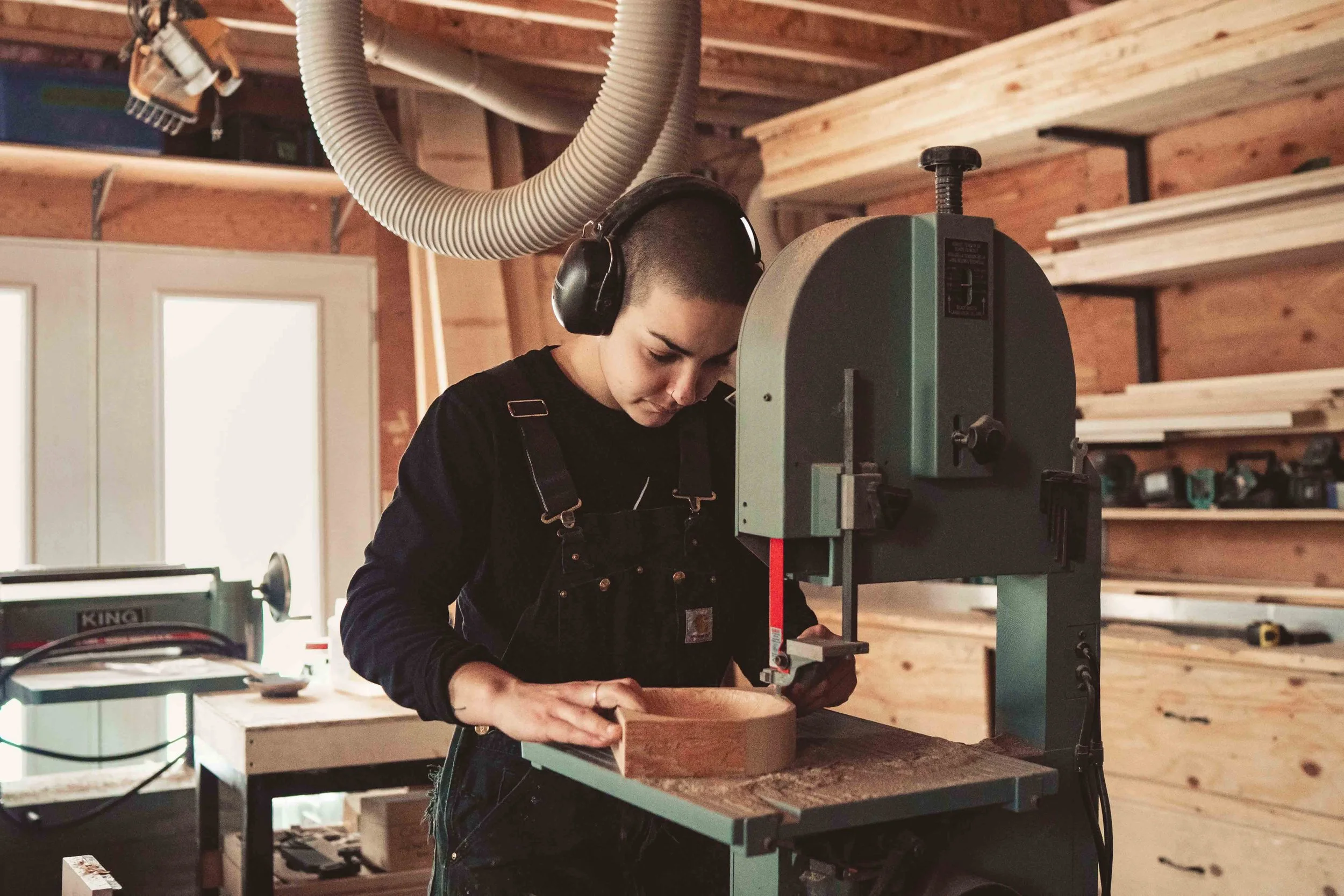
Catherine Ouellet, in her workshop, making one -off, custom wood pieces.
Why women struggle with visibility
For many women, the hesitation to be visible is not accidental, it's years of conditioning at work. We are taught, directly and indirectly, to be agreeable. To not take up space, to be seen and not heard. To not appear too ambitious or too confident (“bossy” vs “natural leader”), to stay likable, absorb discomfort in order to keep the peace, as though your comfort is somehow less valuable… To stay pleasant when teased or even bullied, learning to override your own instincts, to question them and eventually to equate discomfort with care. It teaches us to be risk averse, and there is absolutely risk involved.
Being visible can invite judgment, criticism, and misunderstanding and many a woman has experienced some version of being shut down, overlooked, or penalized for speaking up.
So, we adapt. We wait until we feel ready, overprepare, hold back ideas until they are perfect. We let others take the lead, even when we are more than capable. On top of that, there are systemic barriers that still exist in many workplaces and industries. Visibility is not always equally rewarded. All of this reinforces the same pattern. Stay small, stay safe.
The cost of staying invisible
Invisibility may feel protective, but it comes at a cost. Opportunities pass us by, promotions might go to those who are more visible, not necessarily more capable. Our ideas are overlooked or credited to others. Over time it creates frustration and self-doubt, leading to a quiet questioning of your own value, even when you know what you bring. The internal cost of this creates a disconnect between your internal sense of self and how the world sees you… When you are not fully seen, you are not fully met.
Reframing visibility
Visibility is not ego. It's not self-promotion for the sake of attention. It's self-advocacy, self care, self love. It's allowing your work, your ideas, and your presence to be acknowledged and taking responsibility for how you show up and are perceived. When women allow themselves to be visible, it creates ripple effects, shifting what leadership looks like and expanding opportunities for others to grow. Visibility IS leadership, whether you are in a corporate role, running a business, diving into parenting (motherhood is one of of the hardest jobs out there) or navigating something in between.
The role of personal branding
Whether you’re aware of it or not, you already have a personal brand. It lives in how people talk about you when you're not in the room. It shows up in your communication, your presence, your energy and your imagery.
Are those aligned?
For me, Lifestyle branding is not about creating a perfect polished version of yourself that fits a box. It's about creating a symphony between who you are and how you are seen. The authentic you. When external presence reflects internal identity, visibility becomes less about effort and more about expression.
Practical ways to step into visibility
Visibility doesn't require a complete reinvention, just some small, intentional shifts. Speaking up, even when your voice shakes, doing it is scared. Putting your ideas before they feel perfect. Taking credit for your ideas by encouraging yourself to be associated with, celebrated, rewarded for your work and your wins by choosing to build your dream instead of someone else's. You deserve to show your face and your presence, not just your output and invest in how you present yourself, in a way that feels authentic to you. These don’t need to feel like huge changes, rather they’re consistent choices, muscles trained with practice.

Loranne Bourdages, actress, author, wanted imagery that represented her creativity and ideas.
.
Performative visibility vs authentic visibility
Performative visibility is exhausting, it’s rooted in fitting in. It asks you to be someone else, to meet expectations and check boxes defined by others, all while maintaining an image that is not fully yours. Authentic visibility is sometimes quieter, but far more powerful. It isrooted in self-trust. In allowing yourself to be seen and experienced as you are, not as who you think you need to be to meet someone else’s expectations. Often, we do not even remember where those expectations came from, or who created the template we feel we need to fill. Taking ownership of your wholeness is where confidence actually lives.
Why imagery matters.
We live in a visual world. Before you speak, before you’re introduced, before someone reads a word you’ve written, they see you. Imagery shapes perception. And yet… so many women hide behind outdated photos, no photos at all, or images that do not reflect who they are anymore. Professional photography is not about vanity. It's about visibility. It's about creating images that feel like you, that communicate your presence, your energy, your depth. This is the work I do in both my photography and my sculpture... Not to change how women look, but to reflect who they already are, in a way that allows them to be seen and recognized. If there is a place in your life or your work where you are holding back, you are not alone.
It’s worth asking yourself:
Where am I choosing invisibility?
What am I protecting myself from?
What would shift if I allowed myself to be seen?
Visibility doesn’t not happen all at once. It's built, trained, by the smallest of choices, like learning an instrument, one note at a time.
It begins with simply deciding that you’re worth being seen.